

Vietnam Omnichannel Retail Investment 2026 has moved decisively from a narrative of e-commerce land-grab to one of measured, cash-flow-aware capital deployment. With total retail sales of goods and consumer services expanding nearly 13% year-on-year and real purchasing power recovering across urban cohorts, allocators are recalibrating toward operators that pair digital reach with defensible physical footprints. This deep-dive examines how institutional and Series A and B fundraising is concentrating around capital-disciplined omnichannel models, why specialized retail niches now command a valuation premium, and where the risk-adjusted return sits for investors underwriting the 2026 vintage.
Higher-Quality Consumption Growth Is Reshaping the Vietnam Omnichannel Retail Investment 2026 Base
The macro backdrop underpinning Vietnam Omnichannel Retail Investment 2026 is one of durable, demand-led recovery rather than inflation-inflated headline growth. Total retail sales of goods and consumer service revenue reached VND 3,889.5 trillion in the first half of 2026, up 12.9% year-on-year in nominal terms and, critically, 7.3% after adjusting for price effects. That real figure is the number institutional allocators should anchor to, because it isolates genuine volume expansion in domestic consumption from the roughly 5.6 percentage points attributable to price movement.
The composition of that growth matters more than the aggregate. Accommodation and food services grew 15.6% and travel and tourism services rose 15%, both materially outpacing the 12.5% expansion in core retail goods. This confirms a structural rotation toward experience-led and premium consumption, precisely the categories where omnichannel operators with strong brand equity capture disproportionate share. Average monthly income rose 8.5% to roughly VND 9.0 million in early 2026, and international arrivals climbed 12.4%, reinforcing a purchasing-power tailwind that supports niche, higher-margin consumer formats.
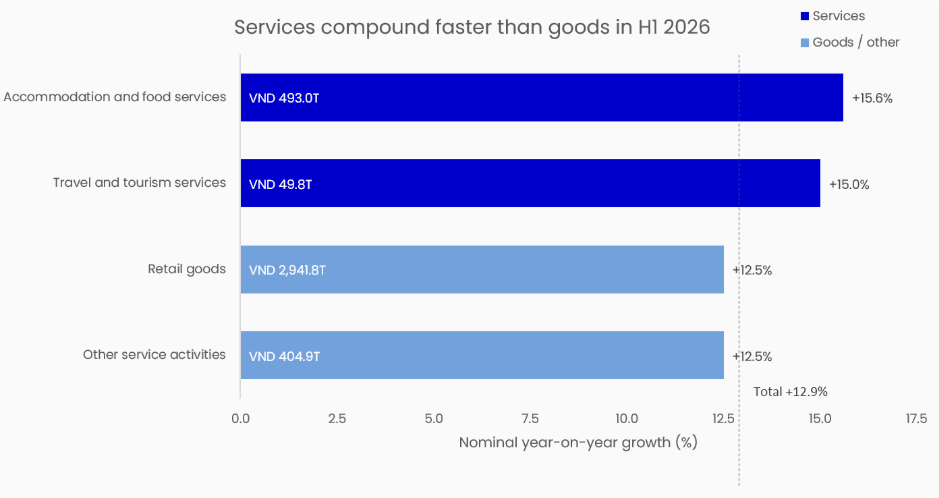
Figure 1: Vietnam retail and consumer services revenue by segment, first half 2026 (Source: National Statistics Office of Vietnam).
Why Capital Discipline Has Replaced Growth at All Costs Across Vietnamese Retail
The defining feature of Vietnam Omnichannel Retail Investment 2026 is a wholesale repricing of what constitutes an investable retail model. Vietnamese venture funding declined for a fifth consecutive year in 2025, with roughly USD 215 million deployed across approximately 41 disclosed transactions. Yet the contraction masks a healthier internal shift: deals sized USD 1-5 million rose from 21% to 43% of activity, capital concentrated in later-stage rounds, and close to 60% of available capital was allocated to follow-on and bridge financing for proven portfolio companies. Roughly 70% of startups that successfully raised were already revenue-generating.
For retail specifically, this environment rewards operators that can demonstrate positive store-level unit economics before scaling. The pure-play, subsidy-driven e-commerce thesis that dominated the 2018-2021 cycle has given way to a model in which physical stores function as acquisition, fulfilment, and service nodes that lower blended customer acquisition cost. The strategic reframing is best understood as a transition across four dimensions.
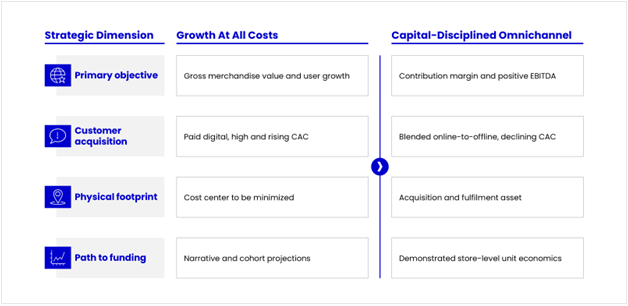
Figure 2: The omnichannel playbook shift reframing capital allocation priorities (Source: DealFlow analysis synthesising VinVentures Vietnam Tech and Venture Capital Outlook 2025).
This is not a retreat from technology. It is a recognition that in a market where blended digital acquisition costs have risen faster than average order values, the operators generating durable returns are those whose online-to-offline infrastructure converts brand-driven demand at a structurally lower cost than single-channel competitors.
Specialized Retail Niches Are Anchoring the Highest-Retention Consumer Cohorts
Capital in the current cycle is migrating toward specialized retail verticals characterised by high repeat-purchase frequency, emotional brand attachment, and low susceptibility to marketplace price competition. Four niches stand out for their retention profiles and their alignment with rising discretionary income.
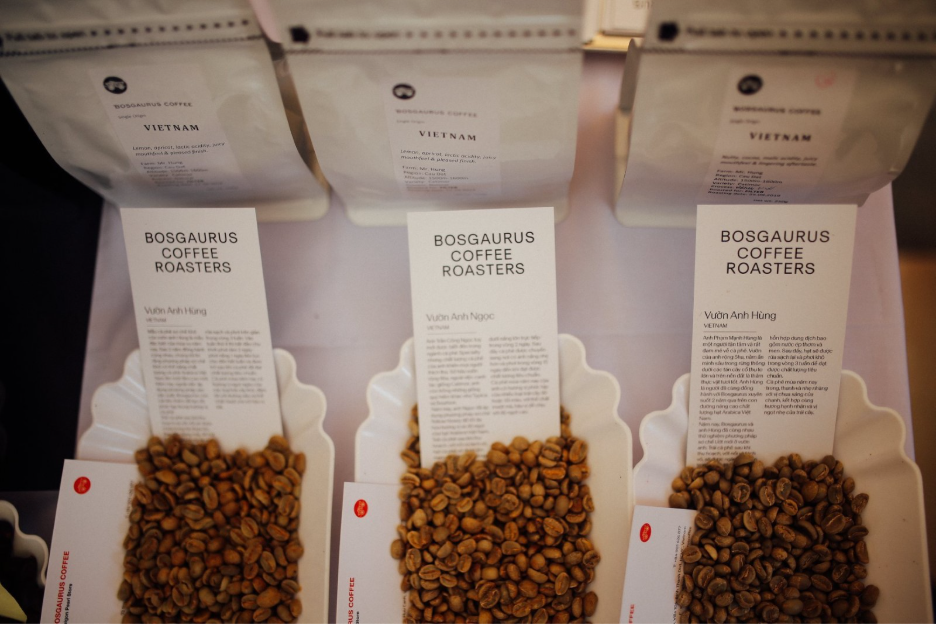
Specialty Coffee and Beverage Chains
Specialty coffee is attracting some of the most active Series A and B fundraising in the consumer space. Every Half secured an USD 8 million Series A in July 2026 from Openspace Capital and DSG Consumer Partners, its third round from those backers, after roughly tripling its footprint from 14 to 36 stores in a year while integrating packaged retail and export channels.
Pet Care Platforms
Vietnam’s pet-owning population is projected to approach 16 million animals by 2027, with a national pet-ownership rate near 79% and 55% of owners intending to raise spending over the next three years. The pet food market alone is forecast to surpass USD 222 million by 2029 at a compound annual growth rate of roughly 9.4%. Health products and recurring consumables generate predictable, subscription-like revenue, and the dominant 25-34 demographic is highly receptive to app-led ordering paired with in-store veterinary and grooming services.
Mother-and-Baby Retail
The mother-and-baby category remains the clearest proof-of-concept for capital-disciplined omnichannel in Vietnam, anchored by chains that combine several hundred physical outlets with digital membership ecosystems. Precedent transactions such as Quadria Capital’s USD 90 million investment in Con Cung established the template of financing a super-app-plus-store model serving a demographic with non-discretionary, trust-driven purchasing behaviour.
Beauty and Personal Care Concepts
The beauty and personal care market reached approximately USD 2.74 billion in 2025. Offline channels have compressed from 92% of sales in 2018 to around 81% by 2023, while online beauty sales approached USD 1.5 billion. Leading specialists such as Hasaki, operating roughly 170 stores alongside a high-traffic digital platform, exemplify the integrated model, and Hasaki’s 2026 entry into the United States signals the export potential of Vietnamese omnichannel formats.
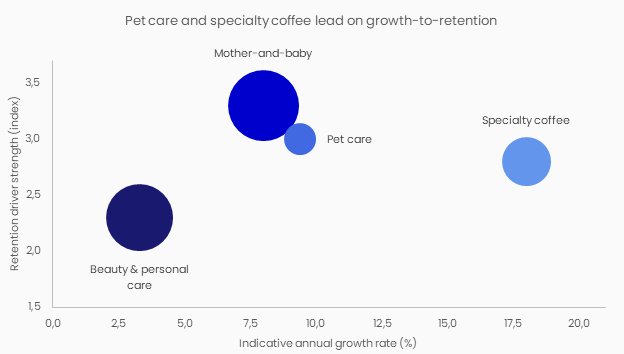
Figure 3: Comparative profile of high-retention specialized retail niches (Source: VietnamPlus, B-Company, and DealFlow estimates).
How Integrated O2O Infrastructure Reshapes Customer Acquisition and Inventory Economics
The analytical core of the Vietnam Omnichannel Retail Investment 2026 thesis is the mechanism by which online-to-offline infrastructure improves the two variables that govern retail equity value: customer acquisition cost relative to lifetime value, and inventory turnover. Single-channel operators face a structural ceiling. Pure e-commerce players pay escalating performance-marketing rates to acquire each incremental customer, while pure brick-and-mortar chains are constrained by catchment geography and cannot capture demand beyond store proximity.
Integrated O2O infrastructure breaks that trade-off. Physical stores convert brand awareness into walk-in acquisition at negligible marginal media cost, then the digital layer re-engages those customers for repeat, higher-frequency purchases. The result is a compounding loyalty loop in which each channel lowers the effective acquisition cost of the other.
- Lower blended CAC. Store visibility and word-of-mouth substitute for a portion of paid digital acquisition, compressing the customer acquisition cost that single-channel operators cannot escape.
- Higher LTV. Membership data, app re-engagement, and service touchpoints such as veterinary care or beauty advisory extend purchase frequency and average basket size across the customer lifecycle.
- Optimized inventory turnover. Shared stock pools across online and offline demand smooth fulfilment, reduce markdowns, and lift return on working capital versus siloed single-channel inventory.
- Defensible contribution margin. The combined effect converts store networks from cost centers into positive-EBITDA acquisition assets, the precondition institutional allocators now require.
For underwriting, the practical implication is that diligence must move beyond top-line growth to interrogate cohort-level payback periods, contribution margin per store at maturity, and the ratio of lifetime value to blended customer acquisition cost. Operators sustaining an LTV-to-CAC ratio above the conventional threshold while funding expansion from internal cash generation warrant a valuation premium in the current climate. The inventory dimension deserves equal scrutiny. A unified stock ledger allows omnichannel operators to serve online orders from store shelves and reallocate slow-moving inventory across the network, materially lifting stock turns and reducing the markdown leakage that erodes gross margin in single-channel formats. In categories with perishable or trend-sensitive assortments, such as specialty beverages and beauty, that working-capital efficiency can be the difference between a positive and negative store-level contribution margin. Allocators should therefore treat inventory turnover and days-of-inventory disclosure as first-order underwriting inputs rather than operational footnotes.

The Competitive Landscape and Recent Series A and B Fundraising Signals
The competitive field spans three tiers. Foreign strategic retailers such as Central Retail continue to commit substantial multi-year capital to omnichannel food and property formats. Established domestic specialists in mother-and-baby and beauty command scaled store networks and mature digital platforms. And a cohort of venture-backed challengers in coffee, pet care, and niche beauty is raising the Series A and B capital that will define the next competitive cycle.
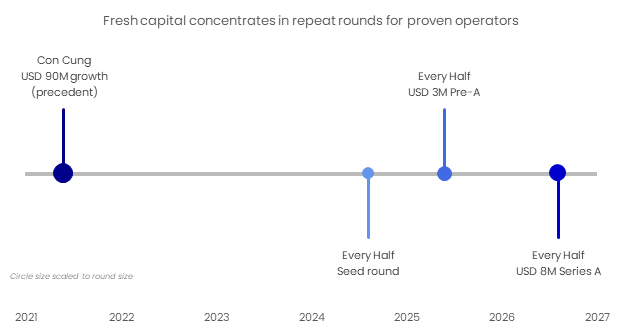
Figure 4: Selected competitive and fundraising signals in Vietnamese specialized omnichannel retail (Source: The Investor, VIR, DealStreetAsia, company disclosures).
The signal for allocators is that conviction is expressed through follow-on rounds into demonstrated performers, mirroring the broader market’s tilt toward revenue-generating businesses. First-time capital is scarce and expensive; capital following proof is comparatively abundant.
Structural Risks and the Investment Angles That Follow
Structural Risks That Could Compress Returns
No responsible articulation of Vietnam Omnichannel Retail Investment 2026 is complete without a clear-eyed risk assessment. First, real growth of 7.3% still sits meaningfully below nominal prints, so operators over-indexed to price-led revenue may disappoint on volume. Second, category-specific ceilings exist. Beauty’s roughly 3.3% forecast market CAGR is modest, meaning share capture, not category tailwind, must drive beauty returns. Third, intensifying competition in specialty coffee risks a rerun of the subsidy dynamics that eroded margins in earlier e-commerce cohorts. Fourth, a venture market in its fifth year of contraction elevates exit and refinancing risk, particularly for capital-intensive store rollouts that outpace internal cash generation.
Where the Risk-Adjusted Return Sits
Against those risks, the most defensible positioning favours operators demonstrating positive store-level unit economics, a widening LTV-to-CAC spread, and self-funded expansion. Pet care platforms offer the strongest structural growth combined with recurring-revenue characteristics. Mother-and-baby remains the lowest-volatility exposure given non-discretionary demand. Specialty coffee provides the highest growth but demands strict discipline on new-store payback. Across all four niches, the durable edge is O2O infrastructure that compounds loyalty and lowers blended customer acquisition cost. Allocators should structure entries with milestone-based tranches tied to contribution-margin targets rather than gross merchandise value, and should prioritise businesses whose physical footprint is an acquisition asset rather than a fixed-cost liability.
Where Disciplined Capital Should Position for the Next Cycle
Vietnam Omnichannel Retail Investment 2026 rewards a fundamentally different investor than the prior cycle. Purchasing-power-led consumption growth, a shift toward capital-disciplined operators, and high-retention specialized niches now make store-level unit economics and integrated online-to-offline infrastructure the arbiters of value. The operators worth backing convert physical presence into lower customer acquisition cost and higher lifetime value, and fund growth from the margins they already generate. For institutional allocators, disciplined diligence on cohort economics and milestone-based structuring will separate durable returns from cyclical disappointment.
As a specialized M&A and fundraising advisory firm, DealFlow does not merely track the market—we facilitate the transaction. Whether you are a fund screening for capital-disciplined omnichannel operators or a founder preparing a Series A or B raise, our team provides the on-the-ground intelligence to operationalize your Vietnam Omnichannel Retail Investment 2026 thesis. Connect with our advisory team at DealFlow.sg or follow our latest insights on LinkedIn.