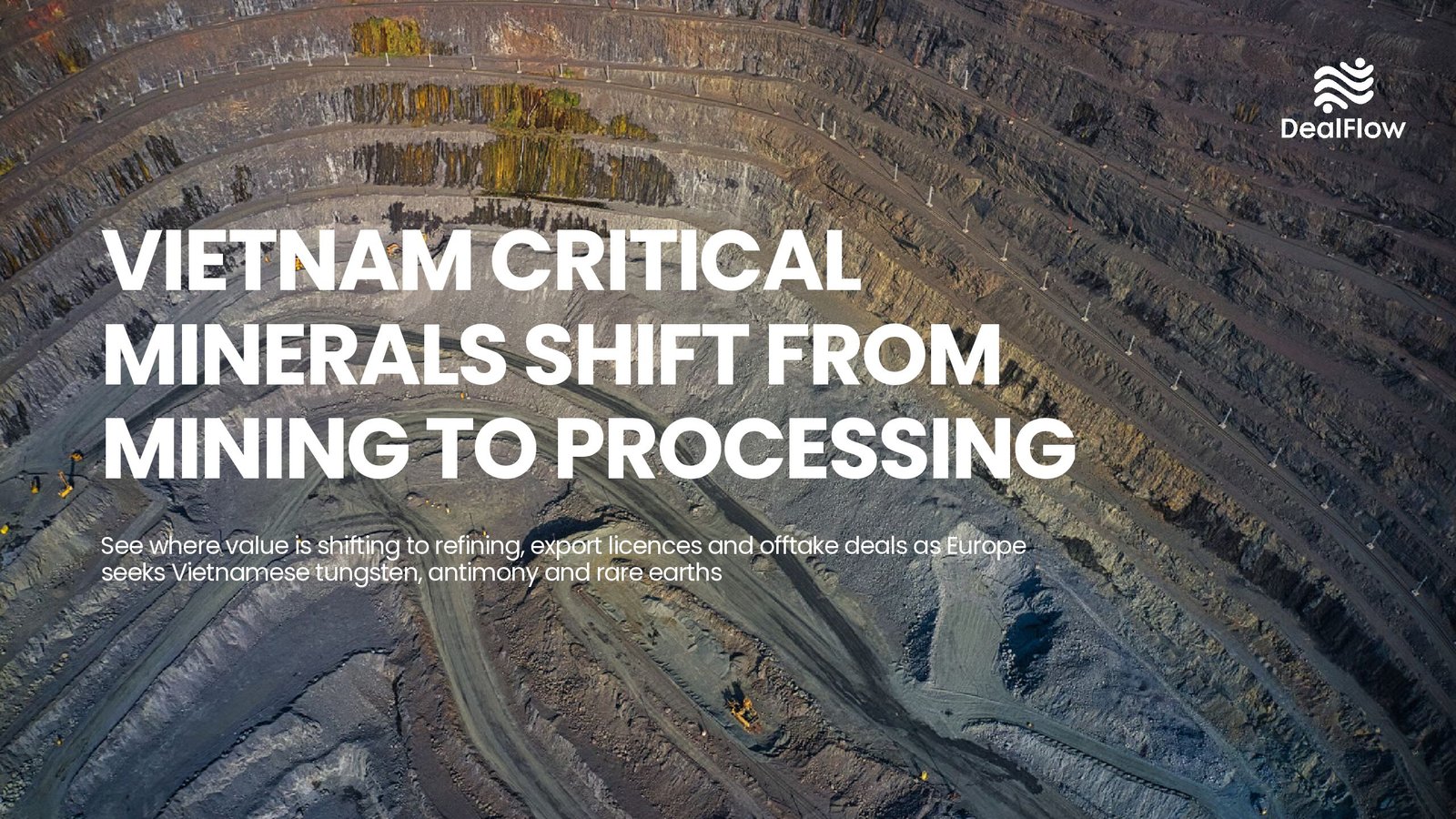
Internal European Union documents dated June 2026 recommend that Brussels support Vietnam’s mining and processing industry to secure tungsten, bismuth, antimony and titanium. On 22 October 2026, Vietnamese President To Lam and EU leaders agreed to explore cooperation on critical raw materials. These developments coincide with a tightening of Vietnam’s own rules, under which raw ore exports are being replaced by processed products. This deep-dive assesses Vietnam critical minerals across processing economics, licensing, environmental risk and emerging partnerships. It concludes that investment value is more likely to accrue to processing capacity than to resource ownership.
Europe Turns to Vietnam Critical Minerals as China Tightens Its Grip on Supply
Brussels Proposes Financing Tools for Mining and Processing
The documents, one of which was prepared by the EU delegation in Hanoi, list loans, grants, technical assistance and export-credit insurance among the proposed instruments, along with efforts to map resources more accurately. They cite disruption to European supply chains following Chinese export restrictions in 2025. Vietnam’s exports to the EU have so far been largely limited to tungsten and antimony, both used in the defence sector. According to Crux Investor, the documents favor support for processing over mining, as processing carries lower political sensitivity for the host country.
Formal Gaps Still Limit the Partnership
Vietnam is not among the EU’s 16 strategic partners on raw materials, and the EU–Vietnam Investment Protection Agreement signed in 2019 remains blocked by a handful of member states, including France. The leaders’ statement of 22 October called for its swift ratification. Technical work on EU Vietnam critical raw materials cooperation is nonetheless under way. On 19 October 2026, the Industry Department of the Ministry of Industry and Trade met experts from the EU Critical Raw Materials Facility who are researching the EU–Vietnam critical raw materials supply chain.
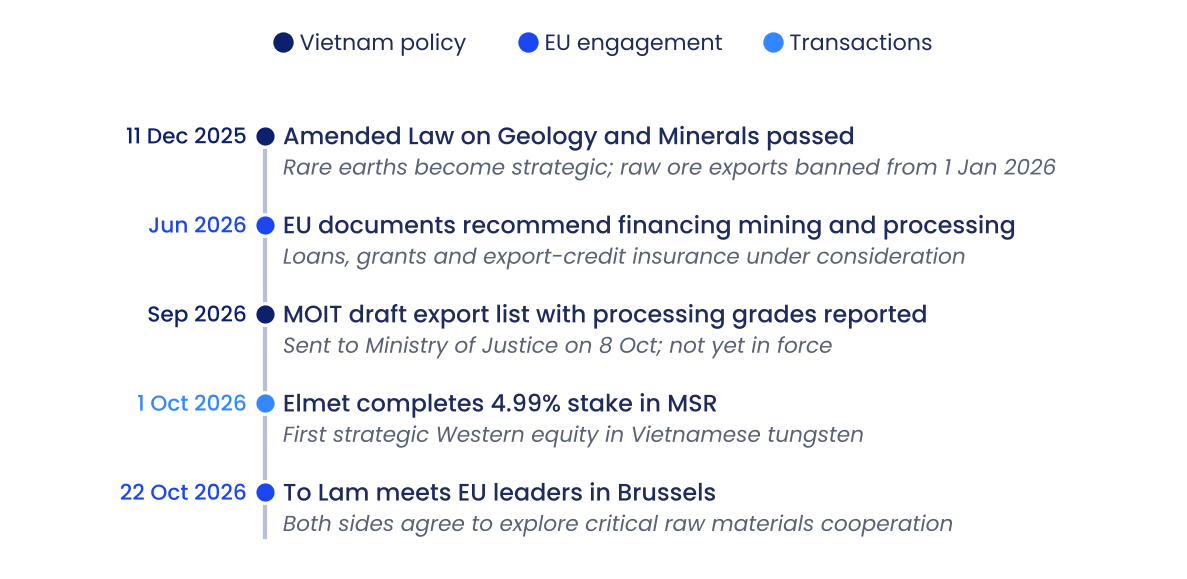
Figure 1: Policy and deal timeline for Vietnam critical minerals with relevance for investors, December 2025 to October 2026 (Source: National Assembly of Vietnam, Ministry of Industry and Trade, MLex, Dechert, Reuters).
Vietnam Holds Deep Reserves but Captures Little of the Value Chain
Tungsten Is the Only Mineral Where Vietnam Ranks Near the Top
Vietnam produced an estimated 3,000 tonnes of tungsten (metal content) in 2025, ranking second globally after China with approximately 3.5% of world mine output. Nearly all production originates from the Nui Phao polymetallic mine in Thai Nguyen province, and output has declined from 4,800 tonnes in 2021. National tungsten resources and reserves are put at approximately 309,407 tonnes of WO₃.
Rare Earth Resources Are Large but Output Is Close to Zero
Vietnam’s rare earth resources are estimated at 19.82 million tonnes of TR₂O₃, concentrated in the northwest, especially Lai Chau and Lao Cai provinces. Commercial production, by contrast, is negligible. Vietnam does not publish rare earth output data, so the only available measure is a USGS estimate derived from China’s reported imports from Vietnam. On that basis, output was about 150 tonnes of rare earth oxide in 2025, less than 0.1% of the world total. A 2023 government plan targets 20,000 to 60,000 tonnes of rare earth oxides annually by 2030.
Vietnam’s position in other EU-priority minerals is similarly limited. Antimony mine output was an estimated 220 tonnes in 2025, about 0.2% of the world total of 110,000 tonnes. In Vietnam, bismuth is produced as a by-product of tungsten processing. Vietnam does not appear in the USGS refinery production table, and China accounted for 88% of world bismuth production in 2025. Fluorspar is a relative strength, with Vietnam supplying 12% of US imports in 2021–2024.
| Mineral | Vietnam 2025 | World 2025 | Vietnam share | China share |
| Tungsten (t W) | 3,000 | 85,000 | 3.5% | 78.8% |
| Fluorspar (‘000 t) | 160 | 10,000 | 1.6% | 60.0% |
| Antimony (t Sb) | 220 | 110,000 | 0.2% | 36.4% |
| Rare earths (t REO, estimated) | 150 | 390,000 | <0.1% | 69.2% |
| Bismuth (t, refinery) | n/r | 16,000 | n/r | 87.5% |
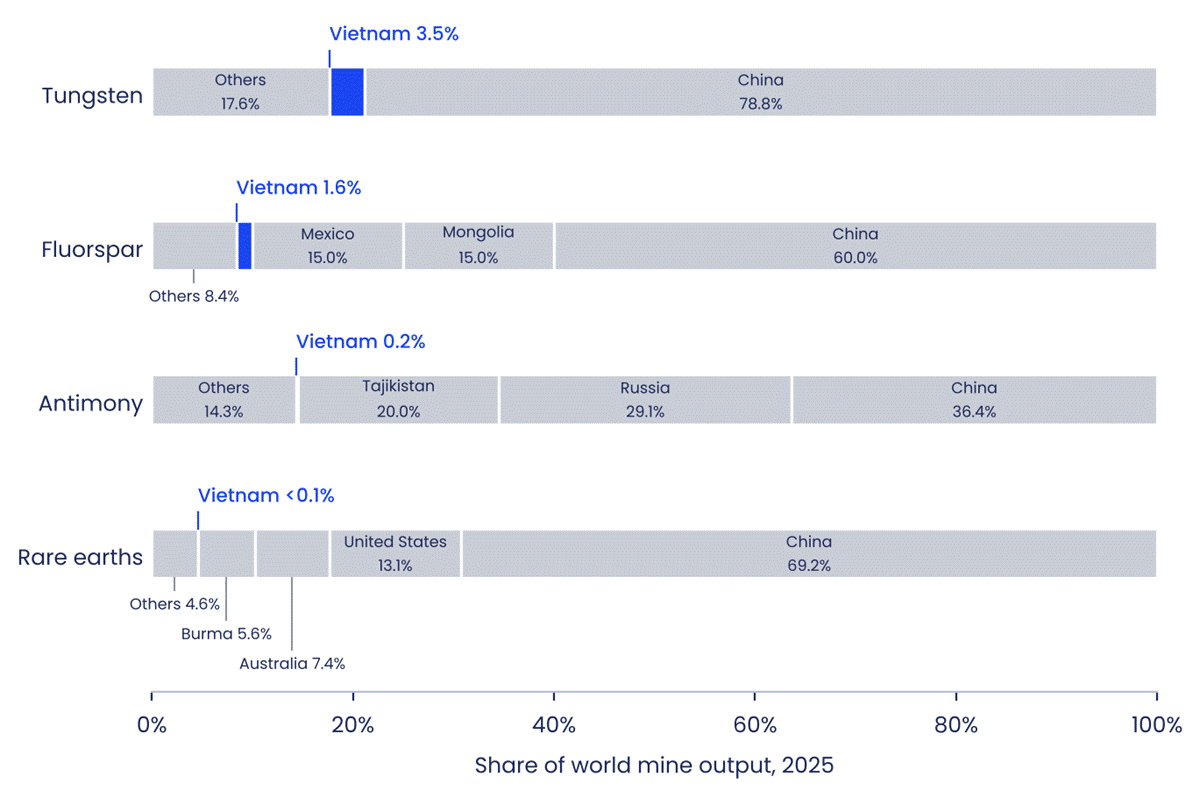
Figure 2: Share of global mine production by country, 2025 estimates; countries below 5% grouped as Others; n/r = not reported separately (Source: U.S. Geological Survey, Mineral Commodity Summaries 2026).
This is significant because Vietnam’s position rests on one producing tungsten complex and on undeveloped resources. Its role in global supply is therefore more likely to expand through refining of domestic and imported feedstock than through mining output alone.
Processing Economics Decide Who Wins the Vietnam Critical Minerals Cycle
Tungsten Demonstrates the Value of Integration
Through its Masan Tungsten Chemicals plant, Masan High-Tech Materials produces refined tungsten products, including ammonium paratungstate (APT) and yellow and blue tungsten oxides. Masan Tungsten Chemicals has a capacity of approximately 9,345 tonnes a year. MSR is targeting tungsten oxide capacity of 8,000 tonnes a year by 2027. It also uses partner-supplied concentrate, so growth is no longer bound to Nui Phao output alone.
MSR reported after-tax profit of VND 537 billion in Q1 2026, compared with a loss of VND 222 billion a year earlier. Q2 2026 after-tax profit reached VND 1,666 billion, against VND 6 billion in Q2 2025, and first-half profit equalled about 88% of the upper end of the full-year plan. That plan assumed an average APT price of USD 1,164 to 1,246 per metric tonne unit (mtu). China holds an estimated 85% of global APT refining capacity, which makes an integrated non-Chinese platform comparatively scarce. Under the draft export rules, Vietnam tungsten exports will be limited to these refined products.
Antimony Offers a Smaller Processing Niche
Ha Giang Mineral Mechanics (HGM), listed on the Hanoi Stock Exchange, reported record 2025 after-tax profit of VND 476 billion, up 157% year on year.
Trade data indicate that Vietnam’s antimony sector relies heavily on imported feedstock. Partner-country records show that Vietnam exported about 7,180 tonnes of unwrought antimony in 2025, up from 5,400 tonnes in 2023, far above domestic mine output of about 220 tonnes. Export value rose from USD 61 million to USD 272 million over the same period. Imports of antimony ores and concentrates increased from about 790 tonnes to 10,580 tonnes. Thailand was the largest recorded buyer in 2025, followed by France and Japan.
China’s suspension of its ban on antimony exports to the United States, announced in November 2025, runs until 27 November 2026, and exports still require licenses from Beijing. A lapse would likely raise demand for non-Chinese antimony, including Vietnamese supply, while an extension would reduce that pressure. Global mine supply is highly concentrated. China, Russia and Tajikistan together produced an estimated 94,000 tonnes of the world’s roughly 110,000 tonnes in 2025, or about 85%.
Bismuth has shown similar price sensitivity. After China imposed export controls on bismuth in 2025, the estimated average Rotterdam price reached about USD 20 per pound, a record and almost four times the 2024 level.
Rare Earths Require Separation and Metallization Capacity
The draft Prime Minister’s decision prepared by MOIT states that the rare earth chain, from mining through separation, has not yet stabilized at commercial scale. Vietnam has no operational industrial-scale plant capable of producing rare earth oxides of at least 95% purity. The first foreign project in Vietnam rare earth processing bypasses domestic mining. Under a preliminary agreement signed in March 2026, Lynas would supply rare earth oxides to a plant that LS Eco Energy plans to build in Vietnam. The first stage will focus on samarium. The companies committed to negotiate definitive agreements under which each would cross-subscribe to about A$30 million of convertible instruments. LS Eco Energy aims to start operations at its Vietnam factory in Q4 2026.
The initial focus on samarium reflects Chinese export policy. In April 2025, China introduced specific controls on samarium, gadolinium, terbium, dysprosium and other rare earth products, and these controls remained in effect after Beijing suspended a broader October 2025 package for one year in November 2025. LS Eco Energy’s chief executive said customers want to build non-Chinese rare earth supply chains quickly, buying at premium prices. The company also intends to reduce costs by using LS Group’s existing sites in Vietnam and the United States.
Price Volatility Affects Processing Margins
The APT price rose from approximately USD 315/mtu in early 2025 to more than USD 3,100/mtu in early 2026. China’s domestic APT price subsequently fell 67%, from RMB 1,515,000 per tonne on 12 March to RMB 500,000 on 12 October, as end-use demand weakened. Valuations should therefore distinguish the structural scarcity of non-Chinese refining capacity from the cyclical 2026 price peak, and cash flows should be tested at mid-cycle prices.
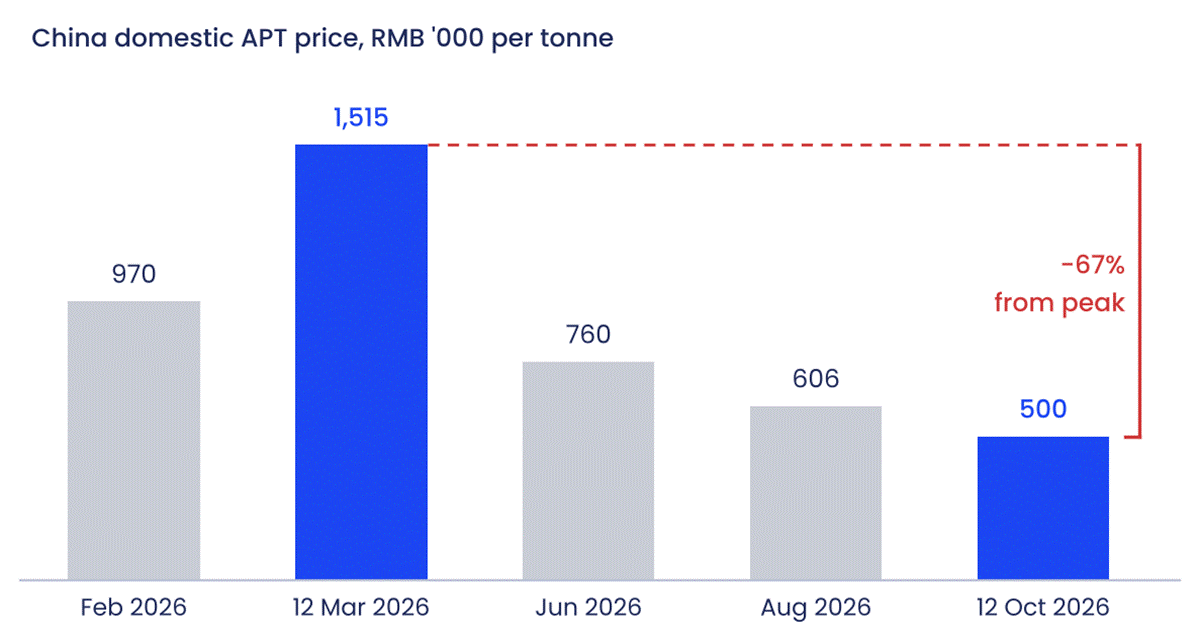
Figure 3: China domestic APT price in RMB ‘000 per metric ton, February to October 2026; February, June and August are Ganzhou monthly prices, March 12 and October 12 are SMM spot averages (Source: Shanghai Metals Market, Ganzhou Tungsten Industry Association).
New Licensing and Export Rules Push Investors Toward Domestic Processing
The Amended Mineral Law Restricts Rare Earth Activity
The amended Vietnam Law on Geology and Minerals, effective 1 January 2026, classifies rare earths as a national strategic resource and prohibits exports of raw rare earth ore. Exploration, mining and processing of rare earths are strictly controlled, and only state-authorized enterprises and organizations may take part. For rare earths, foreign companies must therefore invest in domestic processing or partner with approved operators.
The Draft Export List Sets Minimum Processing Grades
MOIT’s draft decision covers 17 of Vietnam’s 19 strategic minerals, including tungsten, tin, lithium and rare earths, and permits exports only of products meeting specified processing grades. It was submitted to the Ministry of Justice on 8 October 2026 and is not yet in force. For tungsten, the draft sets the minimum export grade at APT or tungsten oxide. An earlier version of the draft, reported in September 2026, proposed that no domestically mined rare earth product be placed on the export list for the current period. The October draft instead permits rare earth exports only when products appear on the list and are processed into separated oxides, metals, alloys, alloy powders or permanent magnets.
Strategy and License Tenure Remain Open Variables
As of February 2026, the government was drafting a National Strategy on Rare Earths for issuance in 2026. Nui Phao is licensed until 2034, and MSR has announced plans to expand Nui Phao and the Nui Chiem site, potentially adding 115 million tonnes of tungsten-polymetallic resources. The framework resembles Indonesia’s nickel export policy in using resource access to attract processing investment. For Vietnam critical minerals, regulation and economics now point in the same direction.
Environmental and Governance Risks Remain the Binding Constraint
Rare Earth Processing Carries Radiation and Water Risks
Researchers reported evidence in 2021 of radiation contamination affecting populations near the Dong Pao deposit. The Lowy Institute notes concerns over deforestation, toxic tailings and water contamination from early expansion in Vietnam’s northern mining regions. Cross-border exposure is also relevant, as a February 2024 chemical leak at the largest rare earth site in Laos’s Houaphanh province polluted the Nam Sam river, which flows into Vietnam.
Governance Events Have Delayed Development
Toyota Tsusho and Sojitz earlier abandoned projects at Dong Pao after Chinese supply expansion depressed prices. In October 2023, Vietnamese authorities arrested the chairman of Vietnam Rare Earth JSC (VTRE), who was accused of forging value-added tax receipts in rare earth trading. The arrests overshadowed a planned auction of new concessions at Dong Pao. These precedents indicate that environmental controls and governance diligence will be preconditions for European financing.
Partnerships and Consolidation Targets Define the Investment Opportunity
Elmet acquired 4.99% of MSR for USD 124.75 million, implying an equity value of USD 2.5 billion, and the transaction closed on 1 October 2026. The investment is accompanied by an off-take of about 1,250 tonnes a year of WO₃-equivalent products for at least eight years and one board seat for Elmet upon completion. The supply agreements are estimated to generate aggregate gross revenue of about USD 1.5 billion over the initial term at prevailing tungsten prices. Earlier, in May 2026, Masan Group, through a wholly owned subsidiary, sold about 2% of MSR, raising the free float to 7.11%. Masan has stated that proceeds from MSR share sales will support its target of reducing group net debt to below 2.0 times EBITDA by the end of 2026. MSR is also seeking shareholder approval for a private placement of up to 5% of its shares, and Elmet is reported to be negotiating a further 5%. This combination of minority equity and long-term off-take is likely to serve as a reference structure for critical minerals M&A in Vietnam.
Potential consolidation is concentrated in four areas: tungsten toll refining, antimony and bismuth smelting, joint ventures with state-authorized rare earth license holders, and metallization using imported oxide
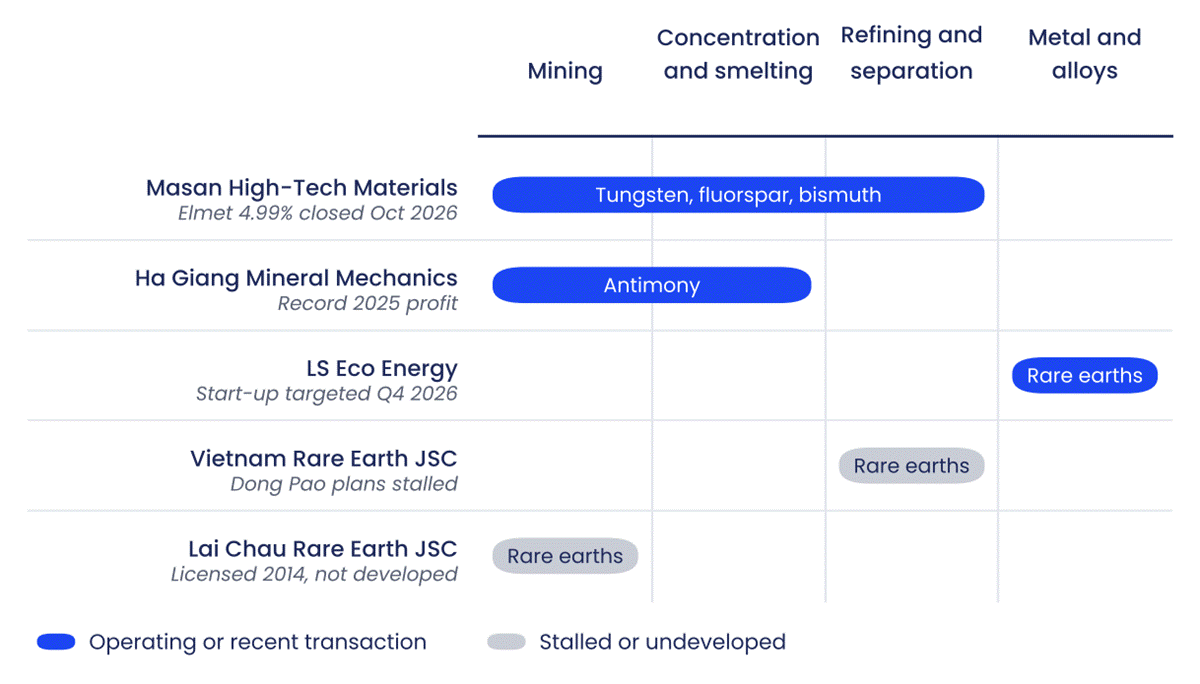
Figure 4: Partnership and consolidation screen (Source: company disclosures, Dechert, Reuters, Mining Magazine, CafeF).
Investment Angles for Capital Providers
- Underwrite at mid-cycle prices, not 2026 peaks.
- Prioritize processing assets, which the export rules and EU funding both favor.
- Structure minority stakes with off-take agreements and board representation.
- Conduct diligence on license tenure, export eligibility and environmental controls.
- Assess eligibility for EU financing instruments.
Vietnam Critical Minerals Will Reward Processing Capital Over Resource Ownership
Vietnam critical minerals are moving from a resource-led to a processing-led investment case. Vietnam ranks second globally in tungsten output but holds a marginal share of other minerals, and its export rules now make domestic processing a condition of access. With European, US, Korean and Australian parties already engaged, returns are likely to favor investors that provide refining capital and technology, accept minority structures and underwrite through the price cycle.
DealFlow advises strategic buyers, processors and investors on transactions and capital raising in Vietnam’s industrial sectors. Connect with our advisory team at DealFlow.sg or follow our latest insights on LinkedIn.